Supernova 1987A | 1987
Supernova 1987A was discovered on 24 February 1987 in the Large Magellanic Cloud (LMC). At around 5th magnitude it was visible to the naked eye, and would become the brightest supernova observed since 1604 (and the brightest extragalactic supernova in history). It would continue to brighten in the coming months, peaking at around third magnitude in May 1987.
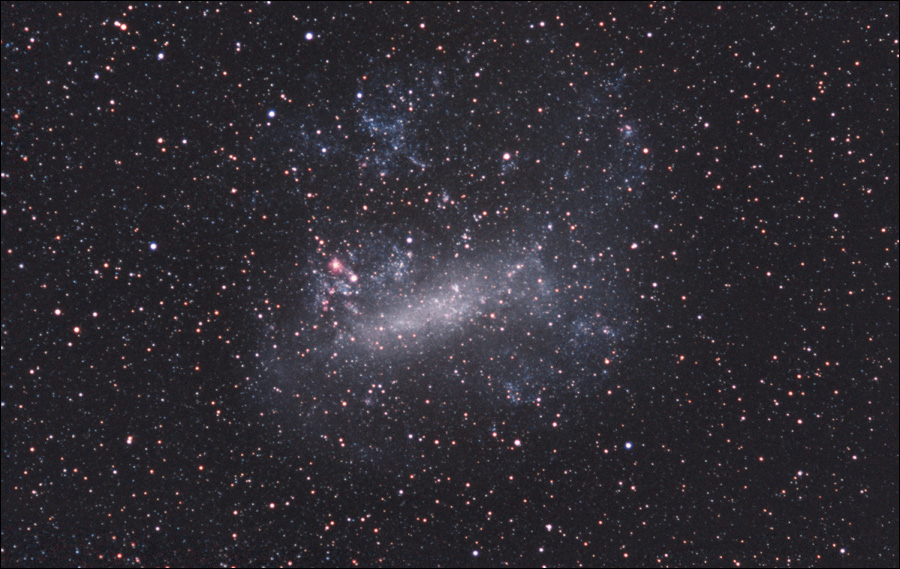
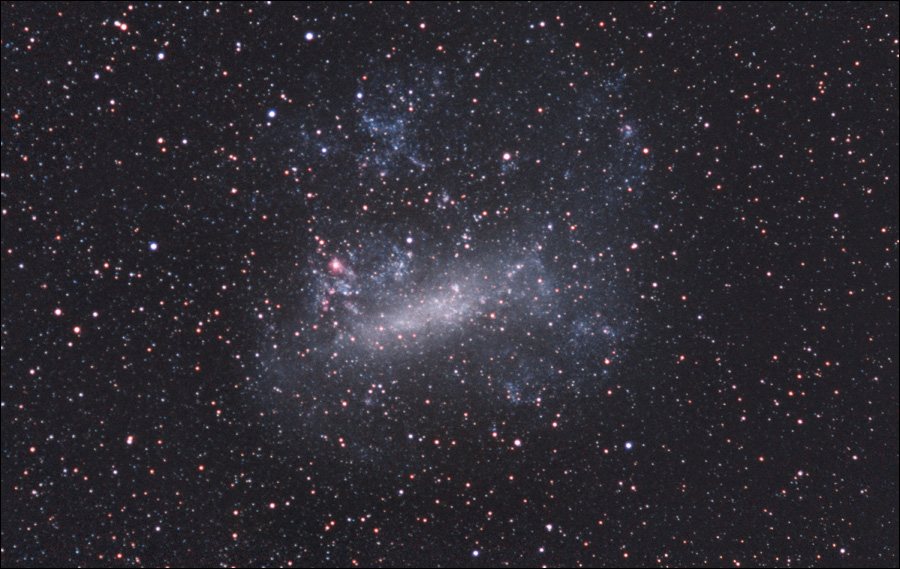
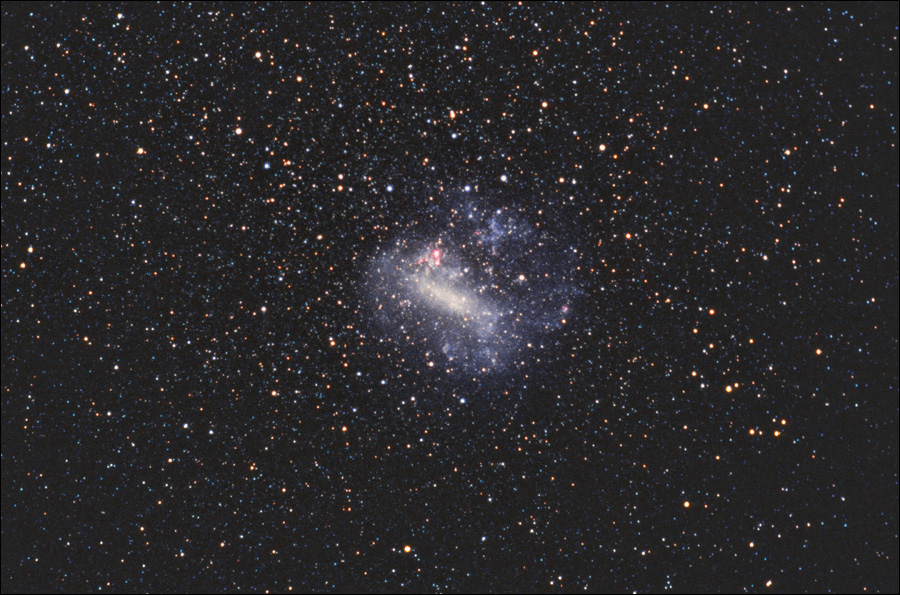
Click on the image below, showing the LMC before the supernova appeared, to toggle a 28 February 1987 image showing the supernova (left of centre, near the reddish-coloured Tarantula Nebula). In those far-off pre-digital days the photographs were made with a 35mm SLR camera, 135mm telephoto lens, and colour transparency film.
Below: An image made on 6 March.
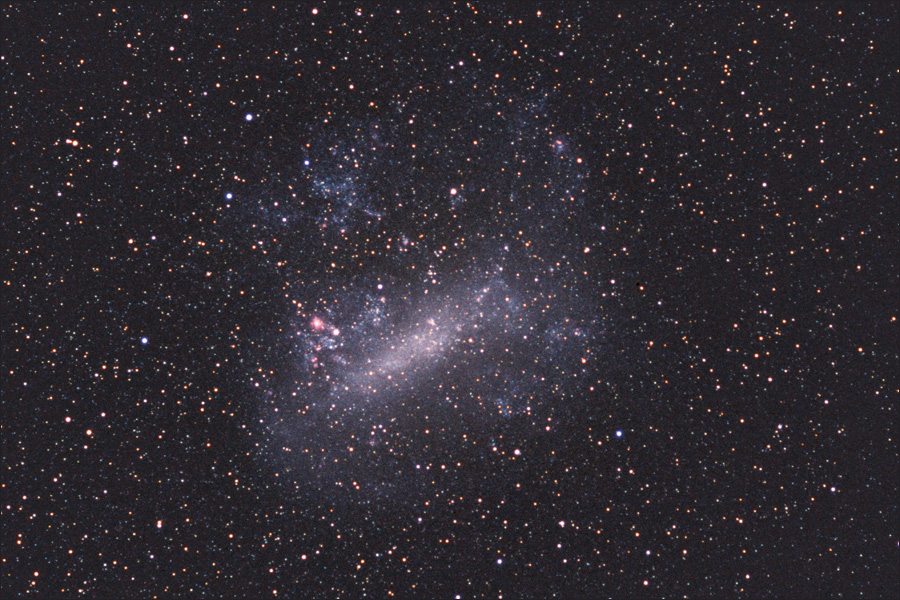
Below: In this image made on 26 March the supernova has brightened to around 4th magnitude.
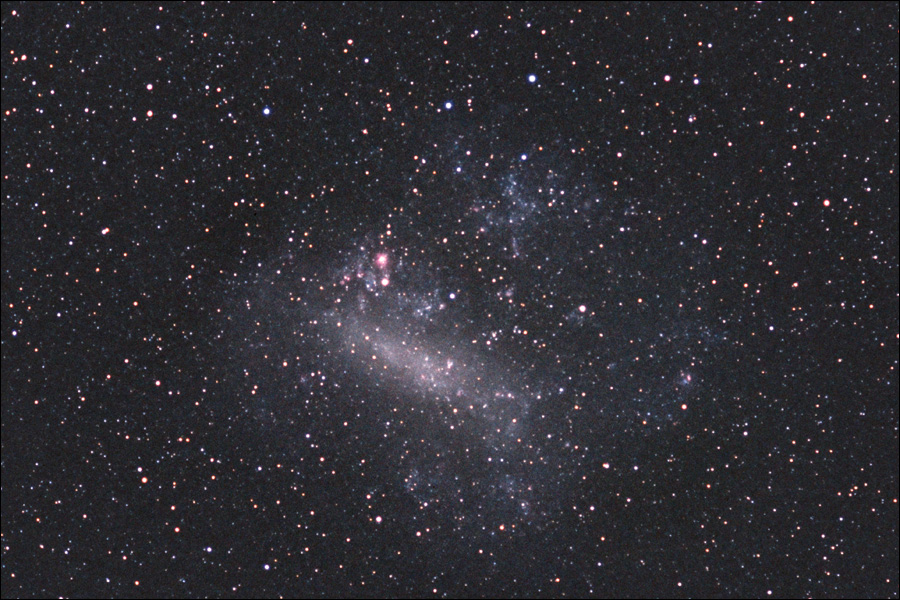
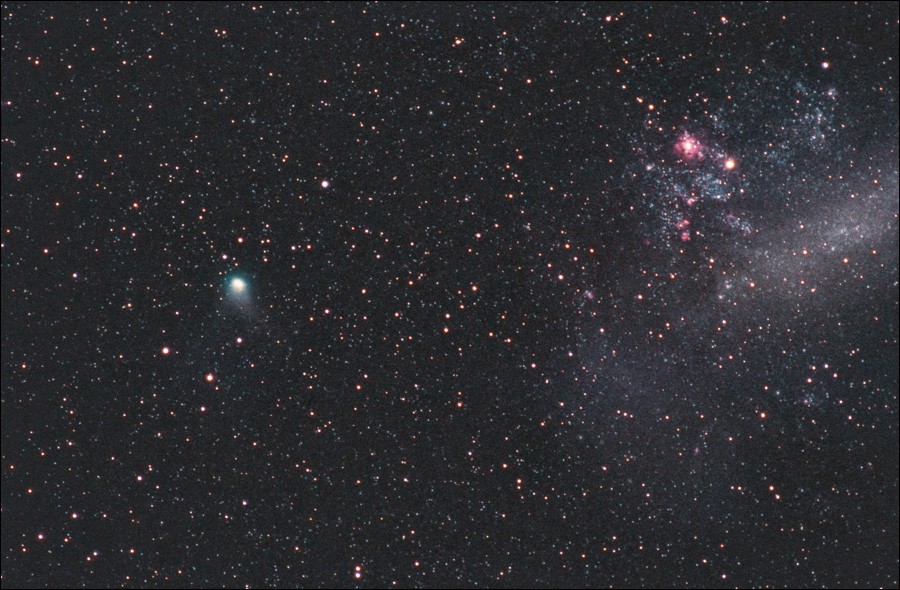
Below: SN 1987A was nearing peak brightness when this image was made on 2 May. Remarkably, a comet also passed close to the LMC at this time (below and left of centre, with a greenish glow surrounding its bright nucleus). This was Comet Wilson (C/1986 P1), and it was at its closest to Earth, shining at about 5th magnitude, when this image was captured.
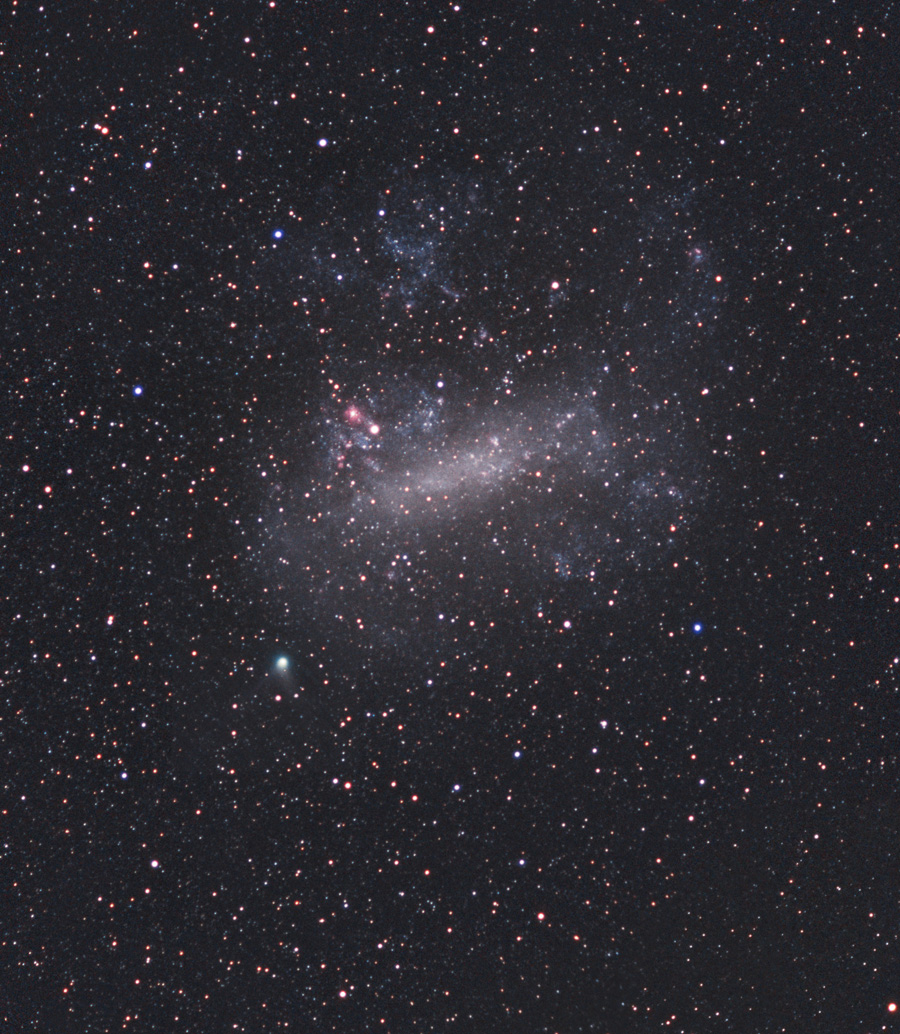
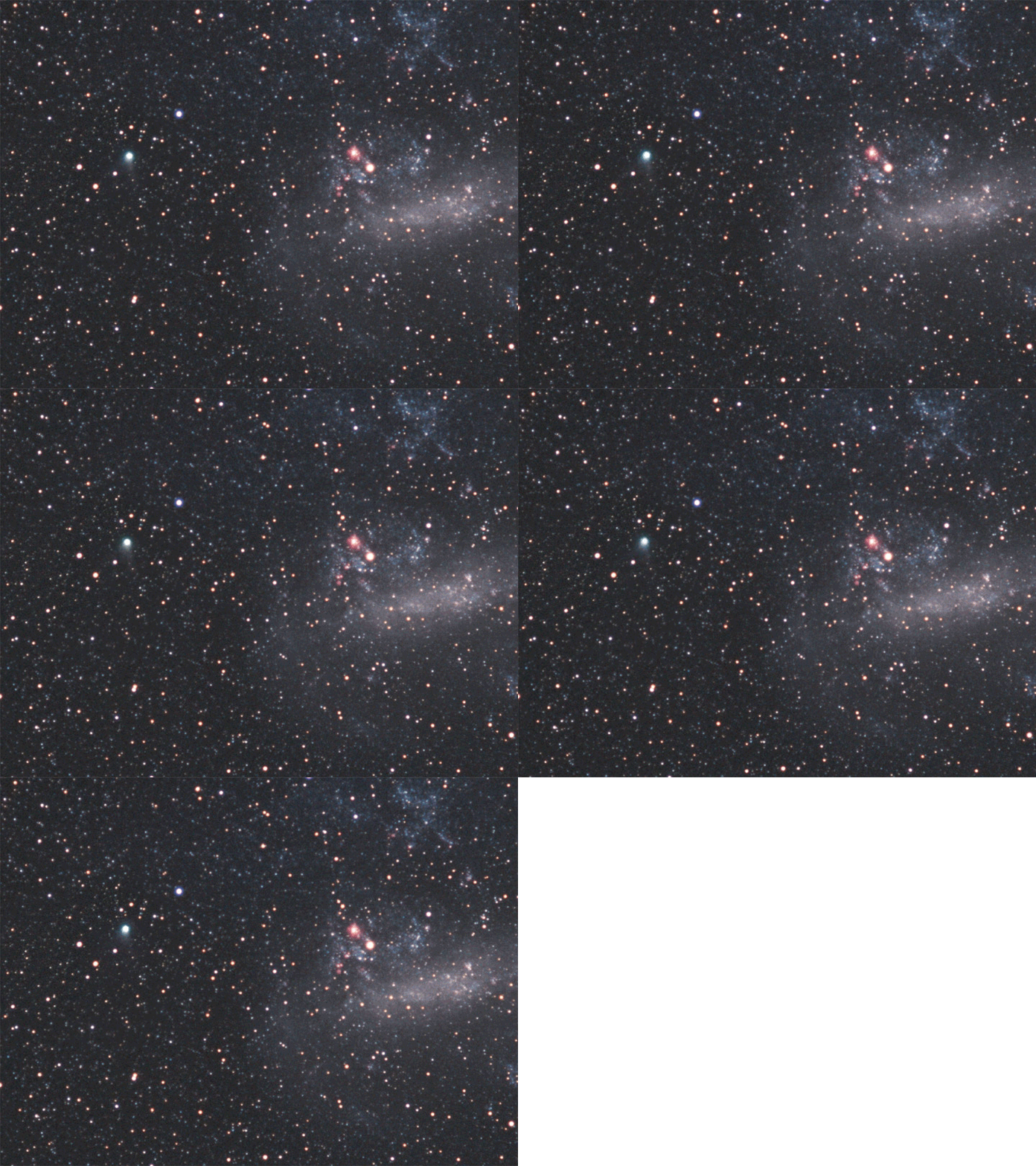
Below is an animation of eight exposures made on 2 May showing the movement of Comet Wilson over the course of an hour or so.
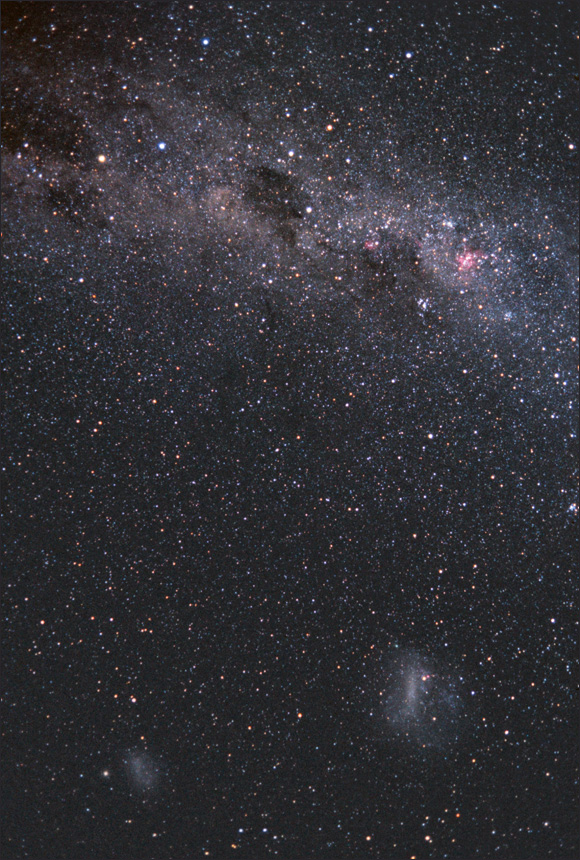
Below: A wide view of the scene on 2 May. The Magellanic Clouds, supernova and comet are below the South Celestial Pole, while above is the rich Milky Way region of the Southern Cross, with Alpha and Beta Centauri at left, Crux at centre, and the great nebula in Carina at right. Image made with a 28mm lens.
On the following night, 3 May, Comet Wilson was still in the neighbourhood of the LMC and supernova as seen in the shot below at 135mm focal length.
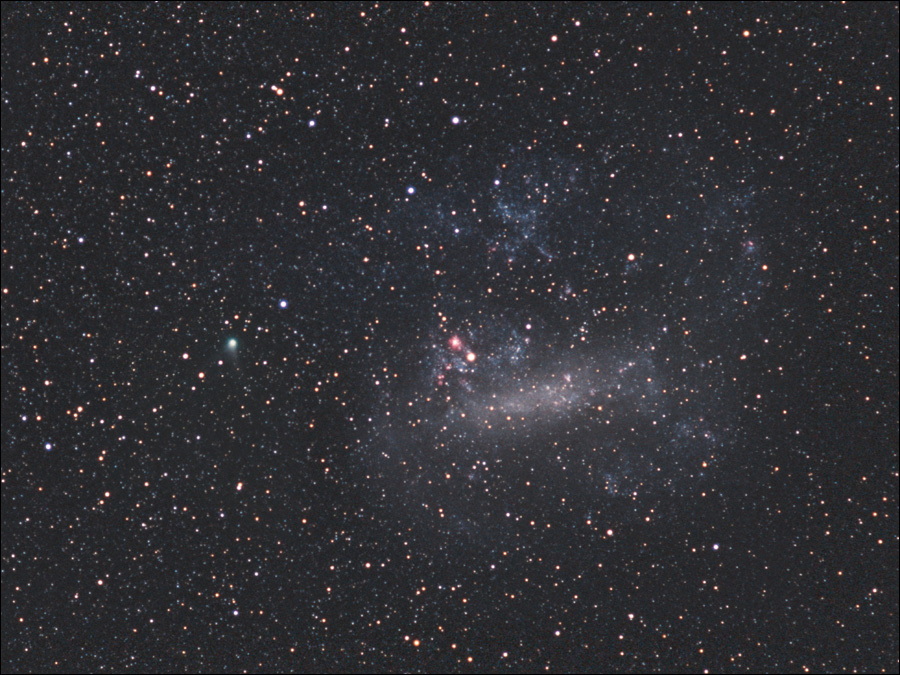
Below: The scene on 3 May shot with a longer lens of 300mm focal length.
Below is an animation of five exposures made on 3 May showing the movement of Comet Wilson over the course of an hour or so.
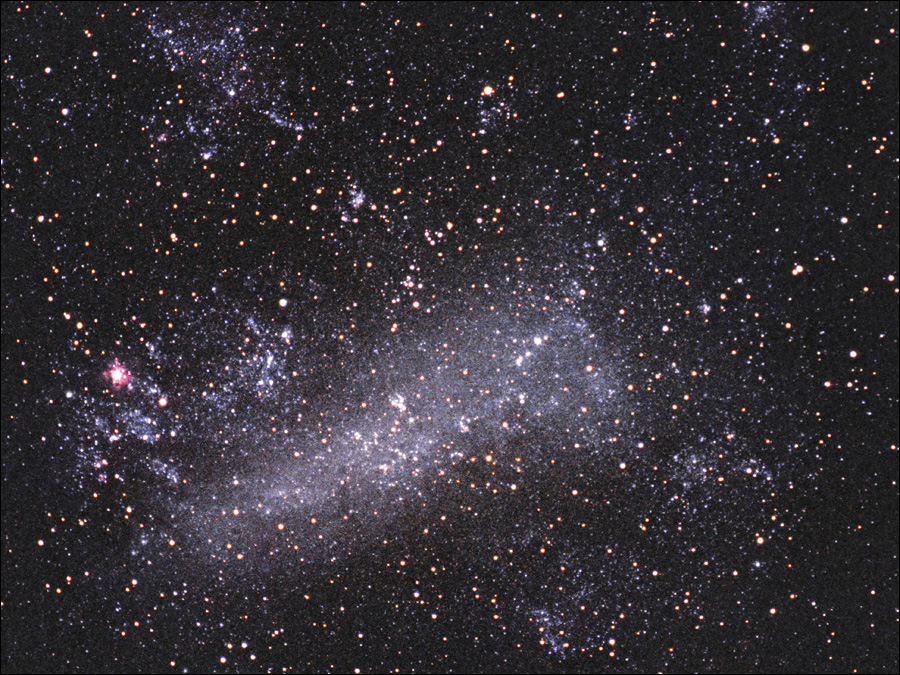
Below: Nearly a year after it appeared, on 21 January 1988, the supernova was fading but still fairly bright at around fiifth or sixth magnitude (135mm lens).
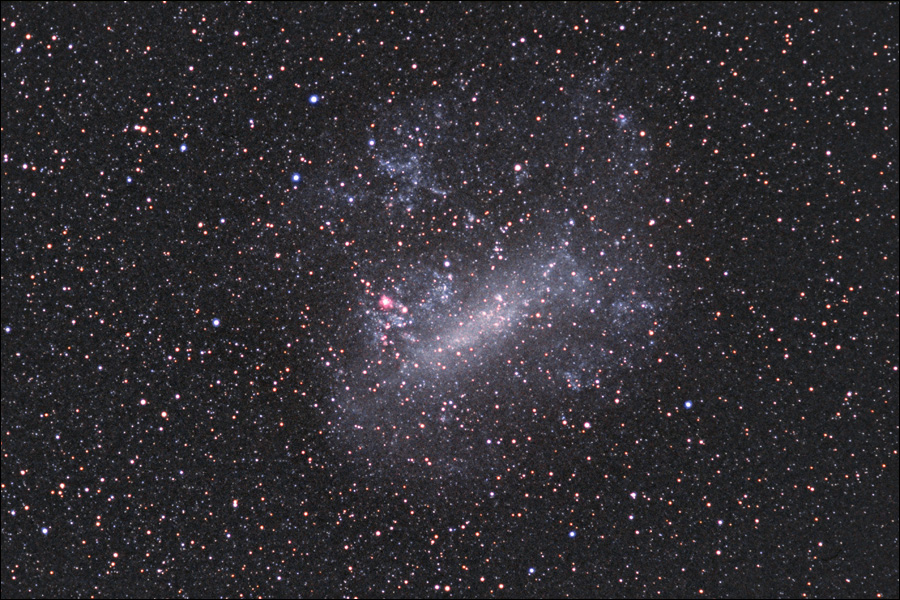
Below: Another image from 21 January, made with a 300mm lens.
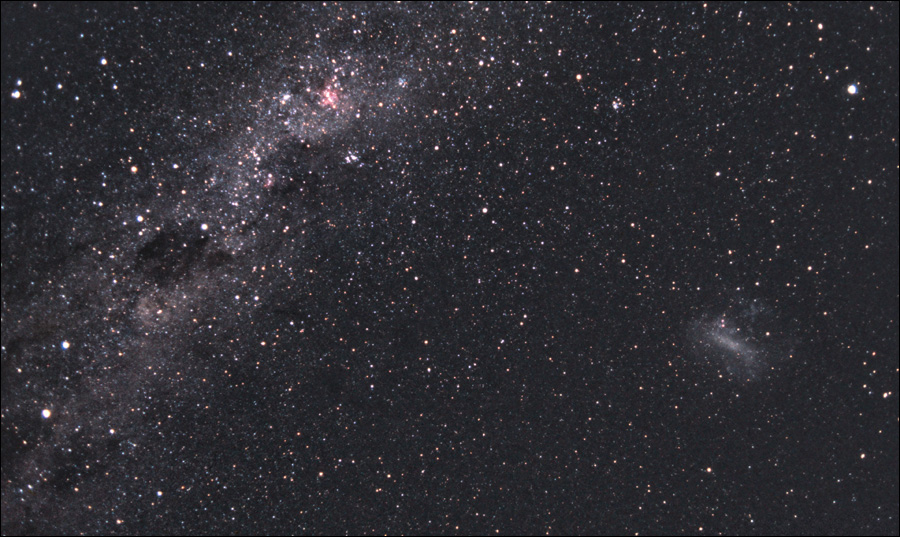
Below: A wide view of the Milky Way and LMC from 3 May 1987. Click on the image to toggle a picture of the same field of view made on 21 January 1988, showing the then-fading supernova.
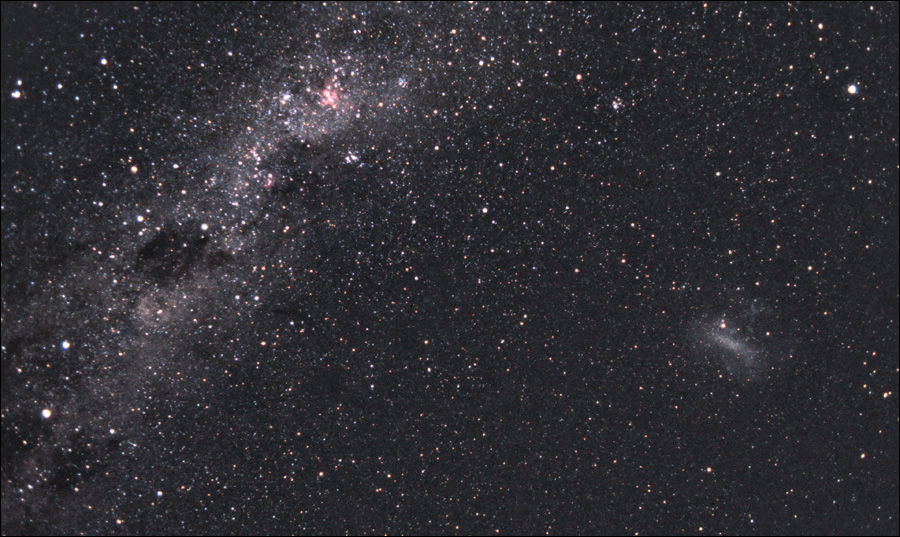
Below is my last picture of the supernova, made in February 1988, in a wide-field view of the LMC.
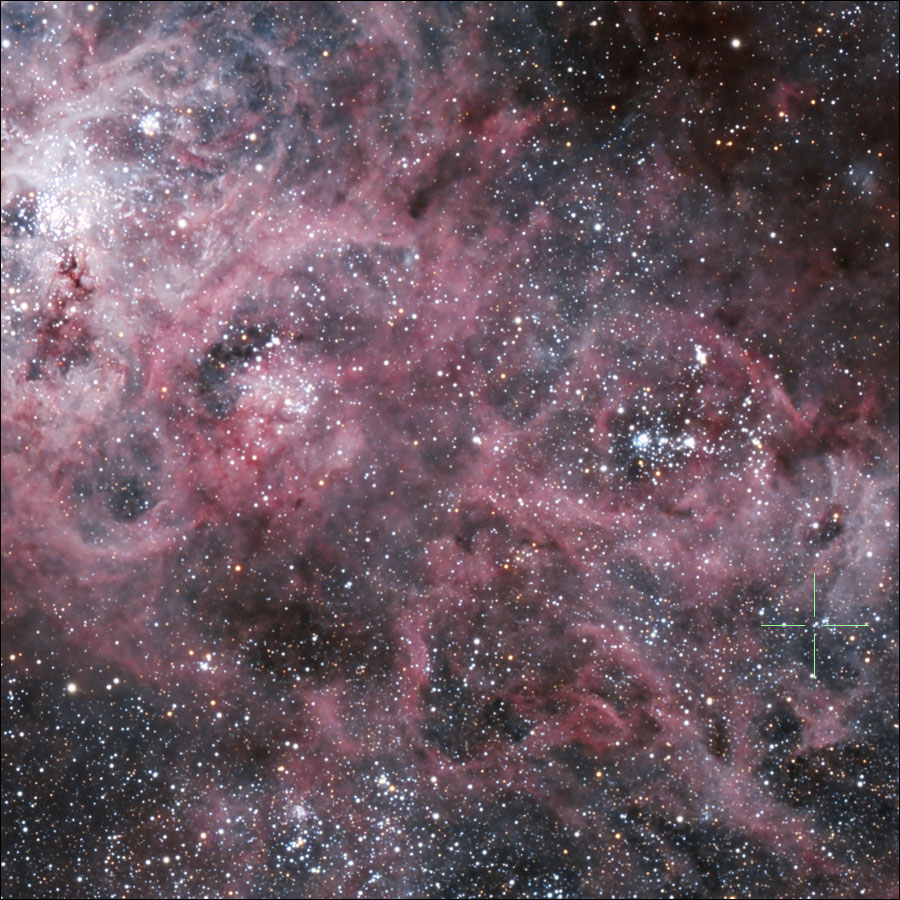
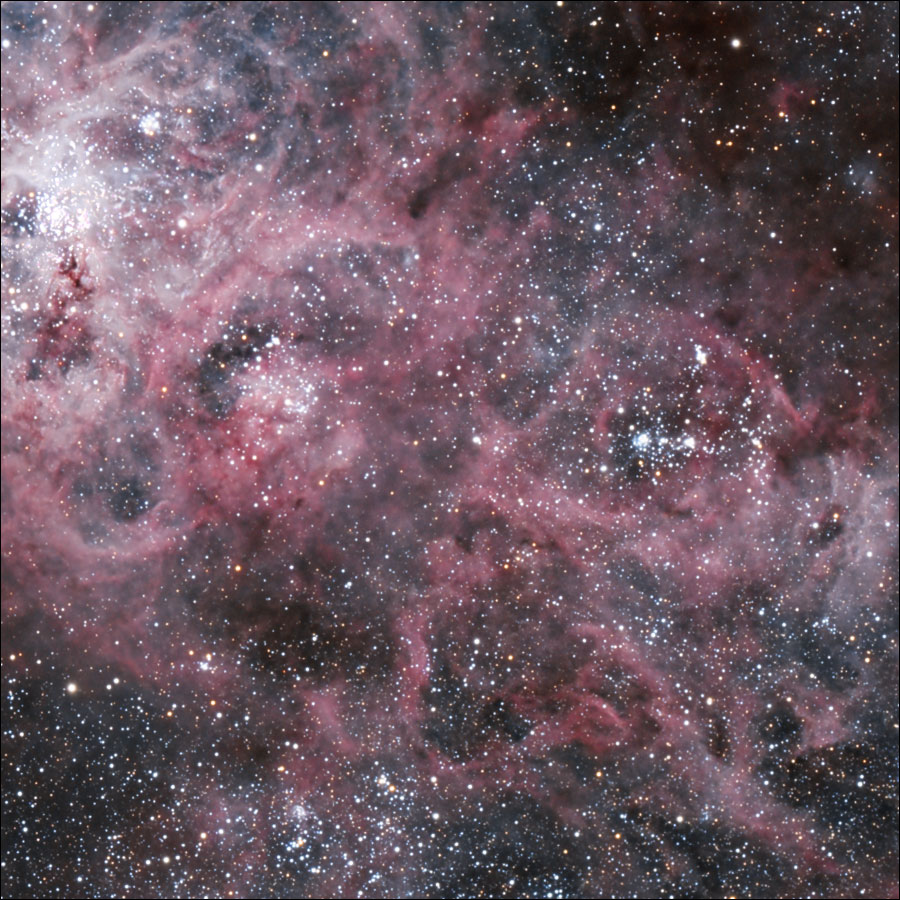
Below: An image of the Tarantula Nebula in the LMC that I made decades later in 2026 with an 11-inch telescope at 560mm focal length. Click on the image to toggle an indicator showing the location of SN 1987A at lower right. The now small and faint supernova remnant itself is not resolved here (as well as being swamped by the light of a star which is nearly superimposed on it). A lot more focal length and resolving power would be needed.